Can you tell me why you chose the two works that you did?
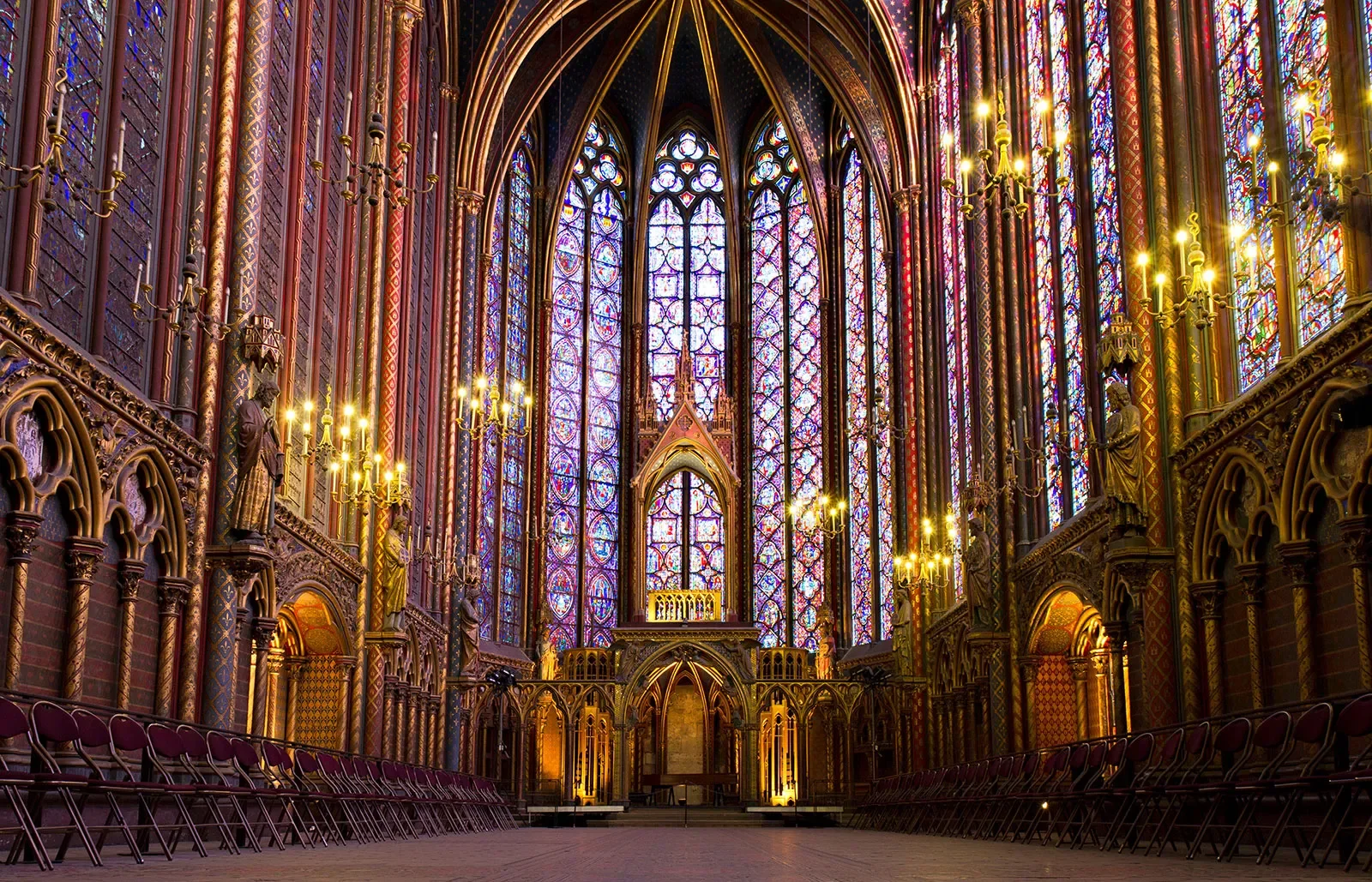
I lived in Paris for many years. The Sainte-Chapelle is a stunning building, and a very surprising one. When I was a young college student, it just blew me away that these kinds of buildings could be built in the Middle Ages. It was part of the royal palace in Paris, and my professor said it was built because the king was very pious. It is such a stunner—covered in gold, with stained glass, enamel medallions, sculpture… so much luxury, and that seemed incongruous with zealous piety. I wanted to dig in more to see what it was really about.
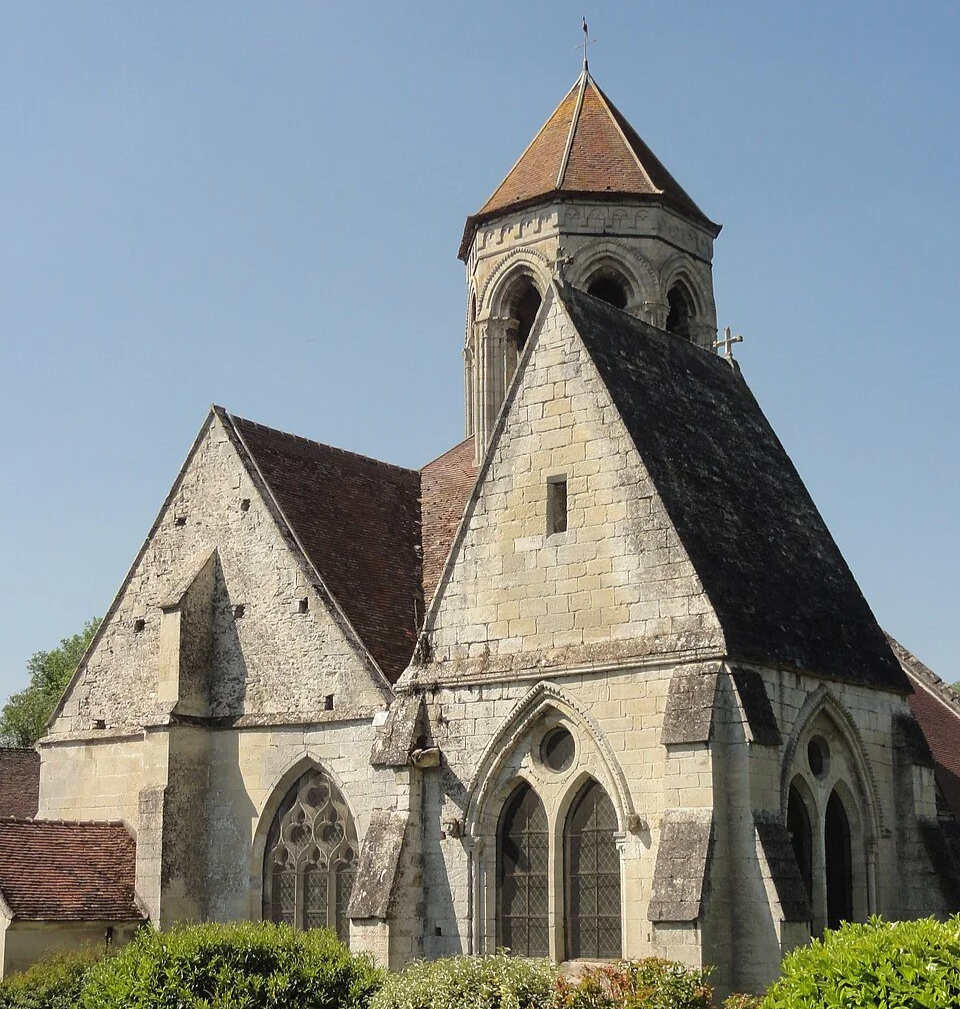
And then I also chose the Église Saint-Denis de Foulangues, which is a tiny little church outside of Paris in the Oise River valley. There are hundreds like them in France, perhaps thousands. Just outside of Paris’s door, are all these amazing churches in tiny villages! And their architecture is so experimental. These buildings deserve attention, too.
You’ve written so much about Saint-Chapelle. Tell me what you found in your research.
I was always a little bit troubled that it was this extremely showy building in the palace, supposedly built just for the king’s personal devotion, his private chapel. It was, after all, one of the tallest buildings built in Paris at the time. So, I looked into it and found that it actually is a very strong statement about royal power and the assertion of sacred royalty, where the king asserts that he has a divine right to rule, that God sanctioned his rule and he is the natural successor of biblical kings. It wasn’t entirely private either. There were large ceremonies there where the king would show the relic that the chapel was made for—the relic of the crown of thorns of Christ. There were huge ceremonies around the chapel in the palace.
People were invited to the chapel and given indulgences—meaning they were given spiritual rewards for visiting. It was very different from what I was taught. And I learned a lot about how art can say things that are more powerful than what was allowed in words at the time.
Can you tell me visually what speaks to you most about the chapel, other than the fact that it’s so grandiose?
There are amazing walls of colored glass. People associate that with Mies van der Rohe, a famous architect of the early 20th century who created what we know as the modern skyscraper with these curtain walls of glass, but really it was the builders of Gothic architecture that developed a skeletal structure for curtain glass walls, [using only] very simple tools. These buildings that have stood the test of time—they’re more than 800 years old. Would our buildings last as long?
Do you perceive the building of the chapel as more of a display of authority or actually an honest expression of piety?
Both. There’s no either/or in the Middle Ages. Louis IX probably was very pious, but he also thought he was second in line to God. He wanted to publicize that, and he thought his ability to acquire the crown of thorns was a sign from God that he was in this position. He also needed to use that to convince the people of his authority. Back in the Middle Ages, there were kings and rulers, but their power wasn’t yet entrenched. It took until the reign of Louis XIV in the 17th century to have absolutist power. This was the 13th century, so he’s on the early end of trying to establish royal absolutism. It’s not the first time that people in power have aligned themselves with God to justify their power to other people. They did that in other times and cultures, but there are times in history when that instinct becomes stronger, and this was one of them.
Can you tell me about the obscure church that you chose?
Gothic architecture was developed in the 12th century, around 1130 or 1140. Its first expression is usually assigned to the Basilica of Saint-Denis in Paris, a really famous, symbolically powerful church, where all the kings of France were buried. At Saint-Denis 1140, all these different elements came together to make the architecture that we call Gothic, the elements that we also see in the Sainte-Chapelle, which is a hundred years later. And the little tiny church outside of Paris that I’m referring to, Foulangues, was built before Saint-Denis, during this developmental phase that was very experimental, where they were working with a lot of the architectural forms, testing them out and seeing what works, what doesn’t work, and how far they can go. They were really interesting. Hundreds of churches like these are, as I said, just on Paris’s doorstep, where they’re experimenting with all these stone vaults and opening up the walls. I think they’re really overlooked. It’s fascinating to know that there are tiny villages with these beautiful stone churches with very forward-looking architecture.
How do you feel these two buildings or chapels fit inside your career with art history?
When I was in 11th grade, I had the opportunity to go to Rome for a semester. And I just couldn’t believe Rome. Every day I had to pass the Colosseum to go to my school, which was a few steps away from the chariot racing horses and the Emperors’ palaces. They were just left over from the past. It blew my mind that culture has continued without stopping since ancient times. I was also fascinated by what we see in our world, what it can tell us about where we come from, and what our history is. It has a lot to tell us that helps us to understand ourselves. It’s a way of understanding the world in a different way from reading texts. Obviously, I do a lot of reading, but this is different from a textual form of history—it’s a visual form of history.
How do you think the two works you chose speak to each other?
One is small and overlooked, but I think really important architecturally. And the other one is big, glamorous, and misunderstood.
Is there anything you want to add?
I think travel is really important for young people all over the world. It gives us a lot of perspective on who we are now and what we’re doing wherever we are. You can travel in space from one place to the next, but you can also travel in time, back to the Middle Ages, Roman period, or Versailles, by visiting these places. I think that kind of travel, by studying, reading, and learning about those things is really interesting because there are a lot of themes and repetition that we can learn from.
