Joseph Koerner: Bruegel and Friedrich
-
Bruegel, Pieter. Hunters in the Snow. 1565. Kunsthistorisches Museum, Vienna
-
Friedrich, Caspar David. Bushes in the Snow. 1827-28. Galerie Neue Meister, Dresden
Famous Work: Hunters in the Snow, Bruegel (1565)

My favorite famous work is Pieter Bruegel’s Hunters in the Snow. It’s a large painting painted in oil paints on a wooden panel support. It shows a vast vista of snow-covered terrain seen from above and stretching to the horizon, to mountains and the sea. The sea is actually a frozen harbor: you can see people walking on the frozen water. The harbor where Bruegel worked for years, in Antwerp, froze over during the years he was painting (the painting is signed and dated 1565). The ground slopes steeply down from where the viewer is positioned, so you feel almost dizzy looking into the painting; hunters pursuing a fox make their way down the slope, too, and birds in the sky add to the feeling of flying into the scene. The white of snow makes the picture almost blinding at first, and because it covers buildings, etc. it makes the world more “abstract” than it might be without snow. This causes the painting to be in places like a modern abstraction.
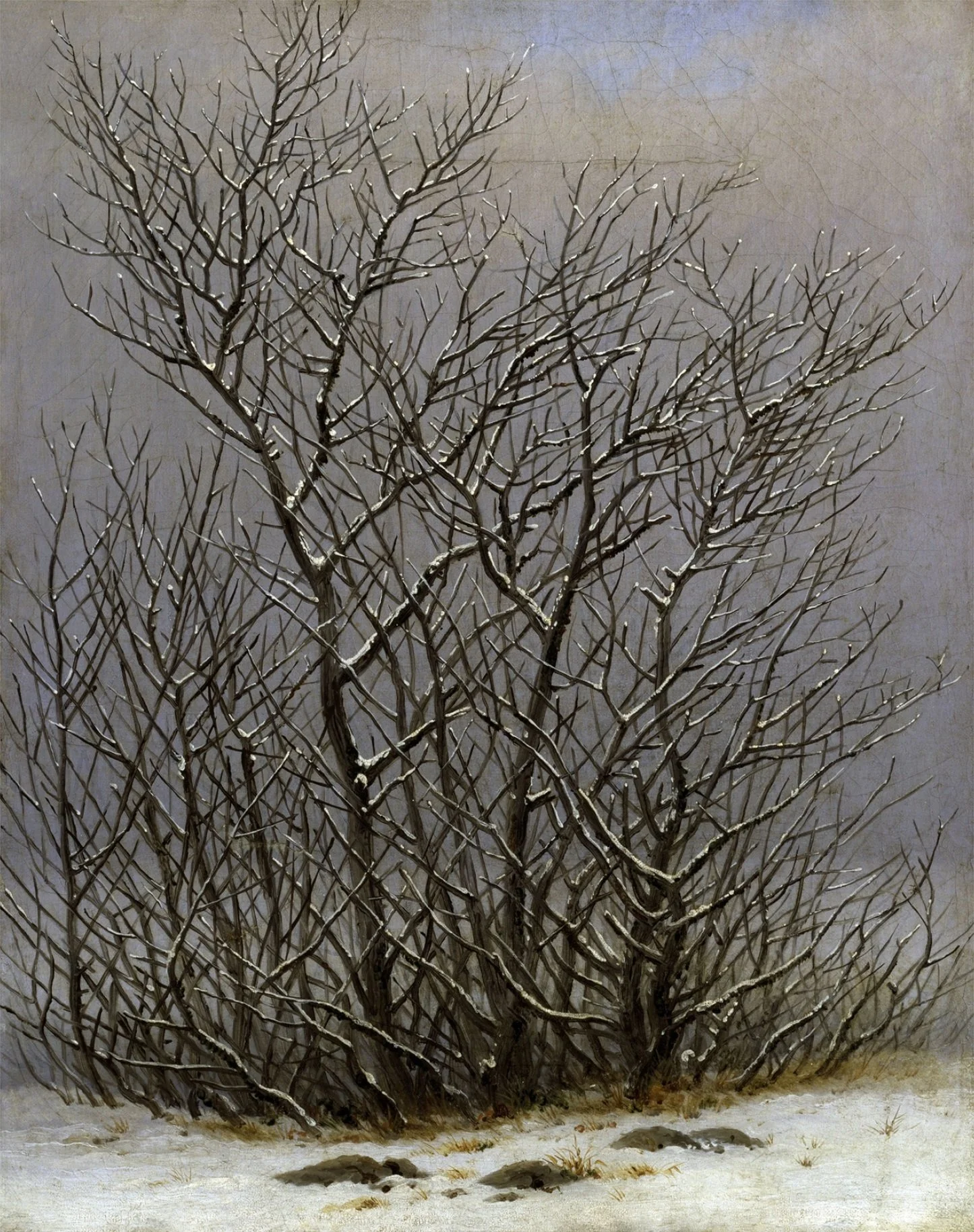
Obscure Work: Bushes in the Snow, Friedrich (1827–28)
Favorite obscure artwork: not that obscure after a big show of the artist in NYC last year, but it was obscure when I started to work on it years ago. It’s by Caspar David Friedrich, and it’s called Bushes in the Snow. It’s a painting of almost nothing. I became an art historian trying to work out how to talk about it.
Verbalizing a work of art is a great experience in thinking and writing. As you describe, you find your original perception changes, but that change belongs to the experience. Writing about the Friedrich picture meant finding that, because of how the work is painted, the picture makes a viewer (eventually) realize that the bushes were an experience, but not one’s own. There’s a ghost of the artist in the picture. This made me want (or rather need, from the shape of my own experience) to find out about the artist: the person Caspar David Friedrich. The move to biography and history came from the shape of the experience of the painting, and that experience was deposited in the description.
Bruegel’s a different thing: a feeling of being overwhelmed, but also looking rather than thinking.
