Personal Canon
Distinguished art historians select two favorite artworks — one famous, one obscure — and talk about what they mean to them.
How Art Stirs the Subconscious
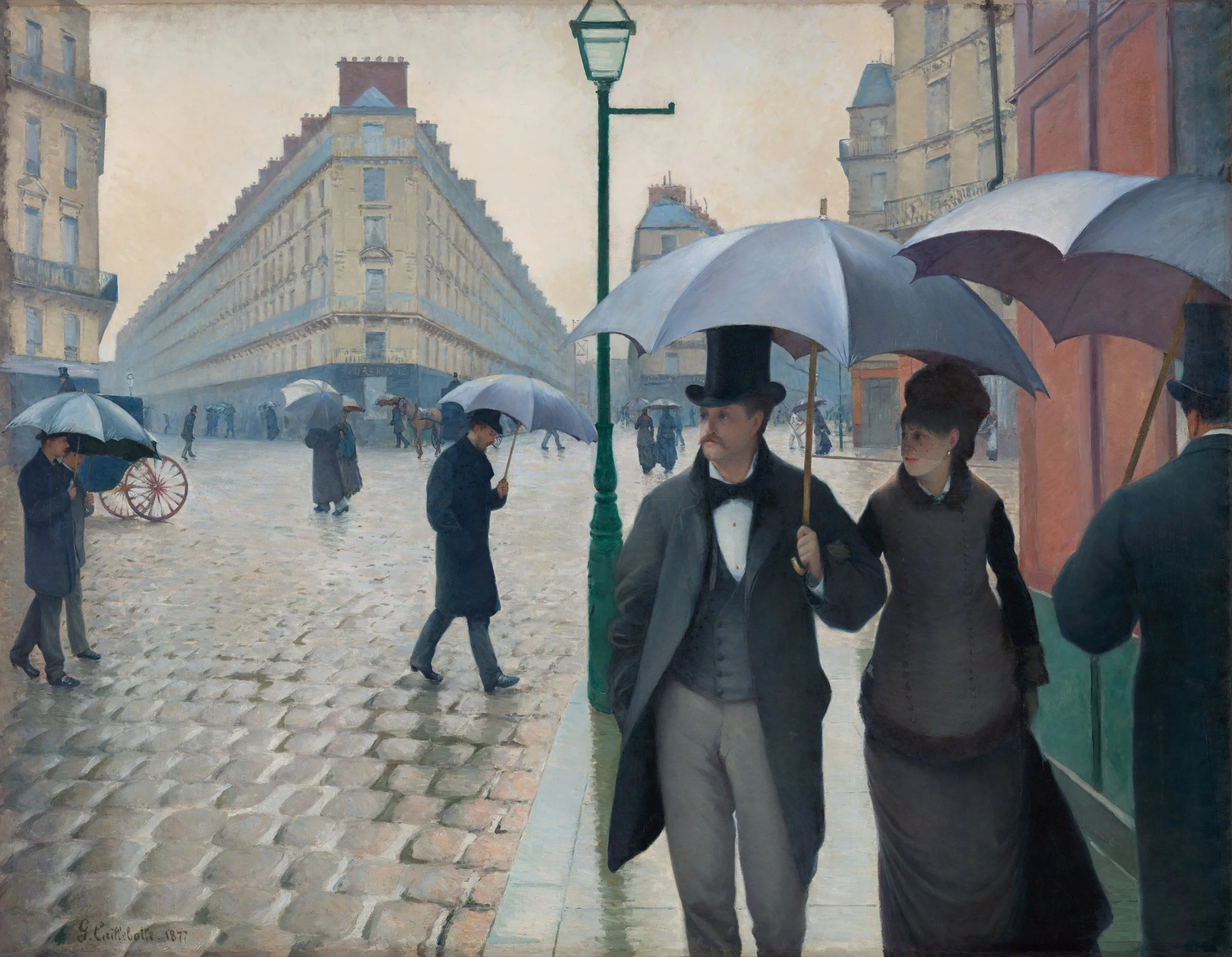
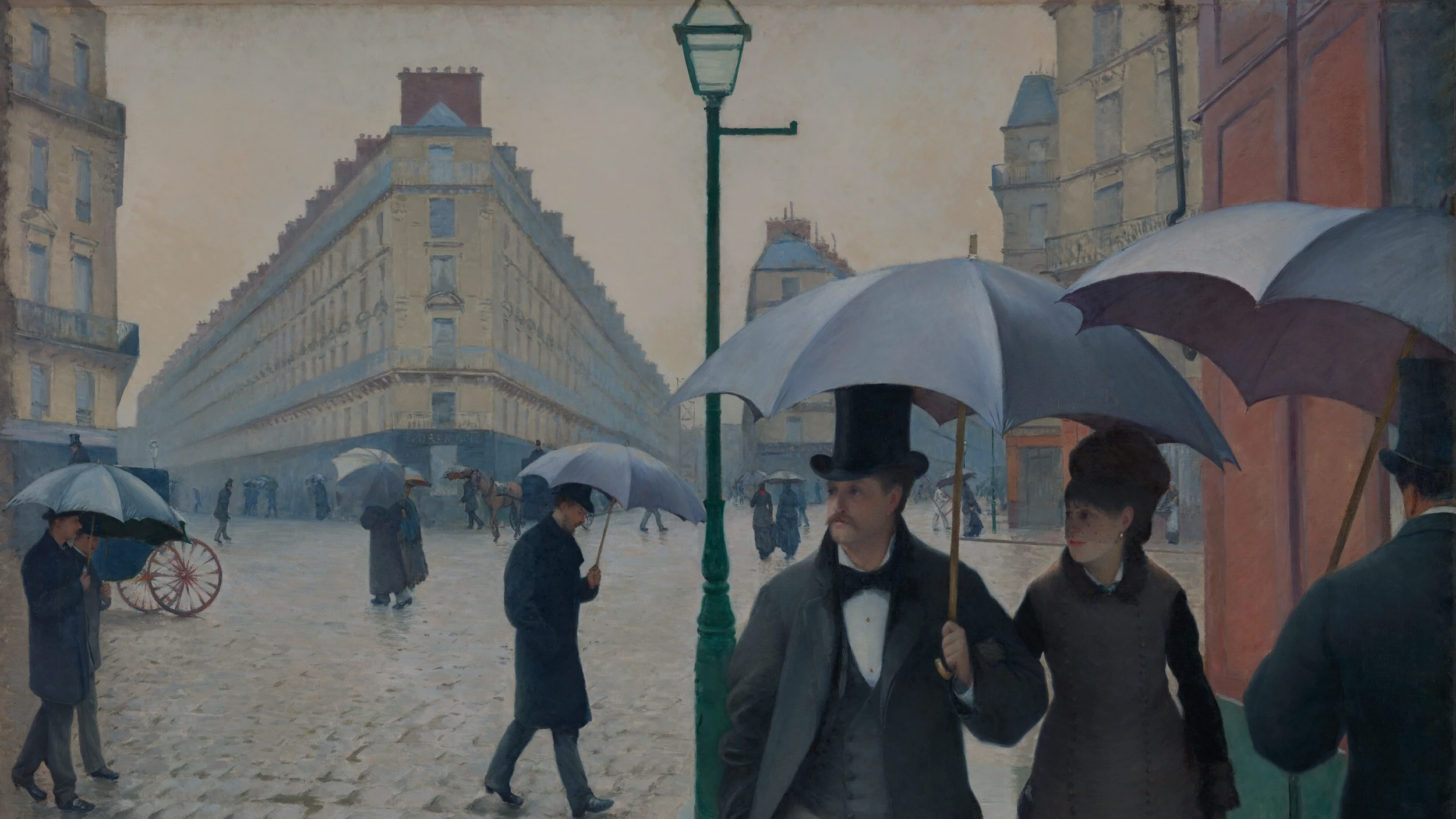
Caillebotte, Gustave. Paris Street; Rainy Day. 1877, Art Institute of Chicago
“Besides being social people… we are all also private. The way a tree grows and orients itself to the light, the way an animal is hungry, or thirsty, or scared, or happy. We have all those features ourselves, as the kind of creatures we are. And art, even when it’s very cerebral and very learned, touches on aspects of ourselves that are not fully under our control.”
— Professor Andrei Pop
Contributing Professors
ㅤFavorite ㅤ ㅤQuotes
“People living in [Florence during the Italian Renaissance] understood works of art and architecture as things they lived with as part of the whole apparatus of their social and political lives—[and] encounter them in a very different way than we do.”
“The works demand that we become speculative viewers. Speculation is essentially taking the raw data of perception, what you see and experience in the visible world, simple or complex, and churning it over in your mind until you “see” the hidden principles that animate the world, whether that is the natural world or the social world of human interactions and institutions.”
Monet, Claude. The Port of Le Havre, Night Effect. 1872, Museum Barberini.
“We still look at it even though we no longer have the same economy, the same politics, the same religious beliefs that gave rise to it... You don’t have to beam yourself back to the moment of its creation to fully appreciate it because it’s not exhausted by one purpose.”
“Verbalizing a work of art is a great experience... You find your original perception changes, but that change belongs to the experience... There’s a ghost of the artist in the picture. ”
“It’s not just that the ideology is changing the art, but that the art is helping to form that ideology. When the king creates this image of himself as a deity, it helps that ideology take shape–to take a visual form.”
“Art can say things that are more powerful than what was allowed in words at the time.”